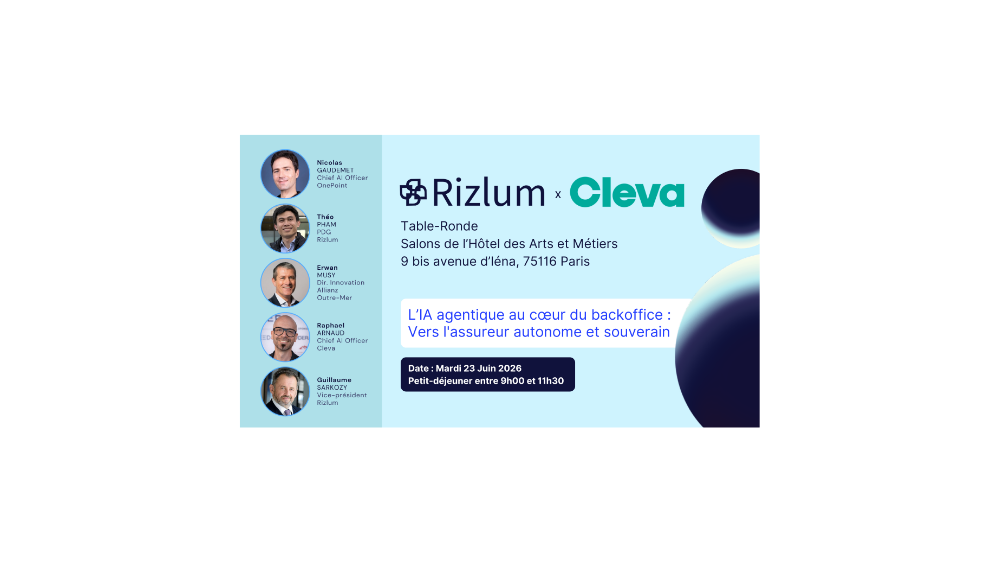
Chez Cleva, nous sommes convaincus d’une chose : dans l’assurance, l’IA ne peut plus être un simple ajout technologique. Elle doit devenir un levier opérationnel intégré au cœur des processus métiers.

Business Lead
In a world of constant technological evolution, insurers face the challenge of keeping up to date to meet the increasingly specific needs of their clients and remain competitive. This updating is based on several pillars, one of the main ones being the architecture of computer systems, which can either favour or hinder technological transformation. In this article we explore how the modernisation of this architecture can create opportunities for innovation and efficiency within insurance companies, while identifying some of the challenges related with legacy systems.
Computer systems architecture includes a set of computer structures and components in an organisation that not only determine how the systems work, but also influence the ability to adapt to technological and business changes. In insurance companies, this architecture plays a crucial role both in the provision of services and in risk management, making it a critical factor for success.
Legacy systems are generally associated with old, obsolete technologies that are more difficult to maintain. These systems pose challenges for insurers within the context of technological transformation. However, each challenge can also represent an opportunity for improvement and evolution, particularly in the following aspects:
There are several strategies that can be adopted to promote technological advances and the modernisation of systems architecture in insurance companies:
Computer systems architecture plays a structural role in insurers’ ability to adapt to the need for technological innovation in a constantly changing market that is susceptible to large-scale events with immediate impacts. Modernising this architecture presents significant challenges, particularly when legacy systems are involved, but it also offers opportunities to improve agility, efficiency, security and customer service to guarantee immediate competitiveness and long-term sustainability.
Chez Cleva, nous sommes convaincus d’une chose : dans l’assurance, l’IA ne peut plus être un simple ajout technologique. Elle doit devenir un levier opérationnel intégré au cœur des processus métiers.
The Pan-European Personal Pension Product (PEPP) in Portugal Act No.1/2025, published on the 6th of January 2025, complies with Regulation (EU) 2019/1238, which establishes the Pan-European Personal Pension Product (PEPP), a pension savings scheme available across the European Union. The main goal of this product is to offer European citizens a complementary alternative to national pension systems, promoting portability, transparency and consumer protection.
In a time in which adaptability and efficiency are crucial for the success of the companies, the insurance industry faces its own challenge with the need to update its core systems to remain competitive.

Cleva s’engage dans le développement de solutions logicielles qui stimulent la transformation numérique du secteur de l’assurance grâce à une plateforme logicielle complète et ouverte intégrant une gamme fonctionnelle complète allant de la gestion des polices à l’évaluation des risques et au service client.